A good bath does more than make a pet smell acceptable. It removes allergens and pollen trapped in the coat, loosens dead undercoat, and lets you feel for lumps, ticks, and sore spots you would otherwise miss. A bad bath strips skin oils, leaves residue that causes scratching, and teaches your pet to fear the bathroom. The difference comes down to a handful of details.
How Often Should You Bathe a Pet?
Less than most people think. Healthy dogs with normal skin do well every four to six weeks; more frequent bathing with a gentle formula is fine for dogs with allergies your vet is managing. Cats usually never need a bath unless something is on their coat that should not be — they are professional self-cleaners. Exceptions: seniors who groom poorly, pets with mobility issues, and long-haired cats with litter-box mishaps.
Water Temperature: The Detail Everyone Gets Wrong
Pet skin runs hotter than ours, so water that feels pleasantly warm to you can feel uncomfortably hot to them. Aim for about 37–38°C (98–100°F) — lukewarm, the temperature you would use on a human baby. Test with your wrist, not your hand. Hot water is the hidden reason some pets dread baths: they are not being dramatic, they were scalded last time.
Why Oatmeal Shampoo Is the Default Recommendation
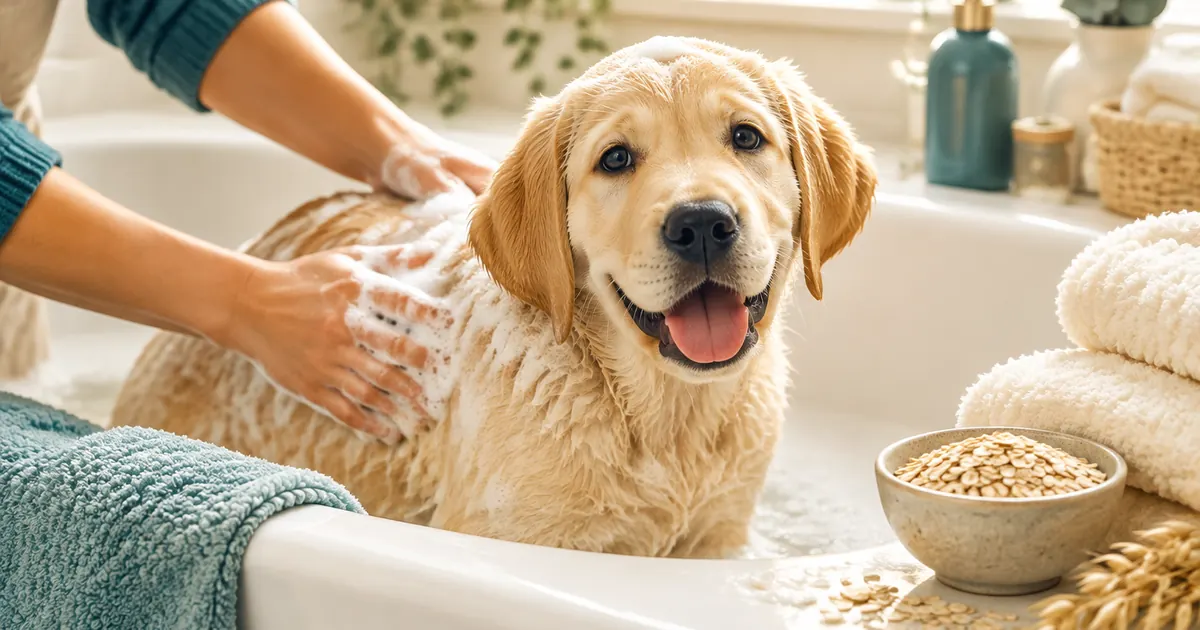
Dish soap, human shampoo, and bargain pet shampoos strip the acid mantle that protects pet skin. The result is the itch-scratch cycle that shows up two days after the bath. Colloidal oatmeal formulas do the opposite: they cleanse gently while laying down a soothing film that calms mild irritation — which is why groomers reach for them by default. The Glorytails oatmeal shampoo and conditioner is hypoallergenic, pH-balanced for pets, and available in 12 oz and 16 oz sizes. It lathers clean and rinses without residue, which matters more than fragrance.
What to avoid in any pet shampoo
- Human shampoo — wrong pH (human skin is far more acidic), causes flaking
- Heavy artificial fragrance — a common contact allergen
- Anything not rinsed fully — residue is the top cause of post-bath scratching
The Bath, Step by Step
- Brush first. Mats tighten when wet and become painful. Ten minutes of brushing before the bath prevents it. A dematting comb handles the trouble spots.
- Protect the ears. A cotton ball just inside the outer ear (never deep) keeps water out.
- Wet to the skin. Water beading off a topcoat does nothing; you want saturation down to the base.
- Shampoo twice. The first wash breaks the grease, the second actually cleans. Work it through with grooming gloves — the silicone tips massage shampoo to the skin while deshedding.
- Rinse, then rinse again. When you think you are done, rinse for another full minute. Residue is the enemy.
- Towel, then warm air. Blot with towels first; a pet dryer or the coolest hair-dryer setting on low, kept moving, finishes the job.
Bathing a Cat Without Losing the Friendship
Trim the claws a day before (see our nail trimming guide), use a sink rather than a tub, and place a towel on the bottom for grip — cats panic when they slide. Keep the water shallow, pour rather than spray, and keep the session under five minutes. If your cat has never been bathed as an adult and does not need one, skip it. No one wins that argument.
Reading Your Pet's Skin After the Bath
The hour after a bath is diagnostic time. While the coat dries, part the fur in a few spots and look: flaking suggests the shampoo was too harsh or not fully rinsed; redness between toes or in skin folds can signal allergies worth mentioning to your vet; and any new lump, tick, or sore spot you find is exactly the kind of early catch that makes bathing genuinely valuable. Dry, dull coats that never improve with better products usually point to diet or an underlying issue — the bath is the messenger, not the problem.
Between Baths
Wipe-downs with a damp microfiber cloth remove surface dirt and pollen without touching skin oils. Regular brushing spreads natural protective oils through the coat, which is why brushed pets smell better longer. And clean bedding matters more than any shampoo — a bath followed by a dirty bed is a two-day fix.
The Takeaway
Lukewarm water, a true oatmeal formula, double wash, and a rinse that goes one minute longer than feels necessary. That is the entire secret. Stock the bath and dental collection once and bath day becomes a non-event — free shipping, no tax, and a pet that smells like they just left the groomer.