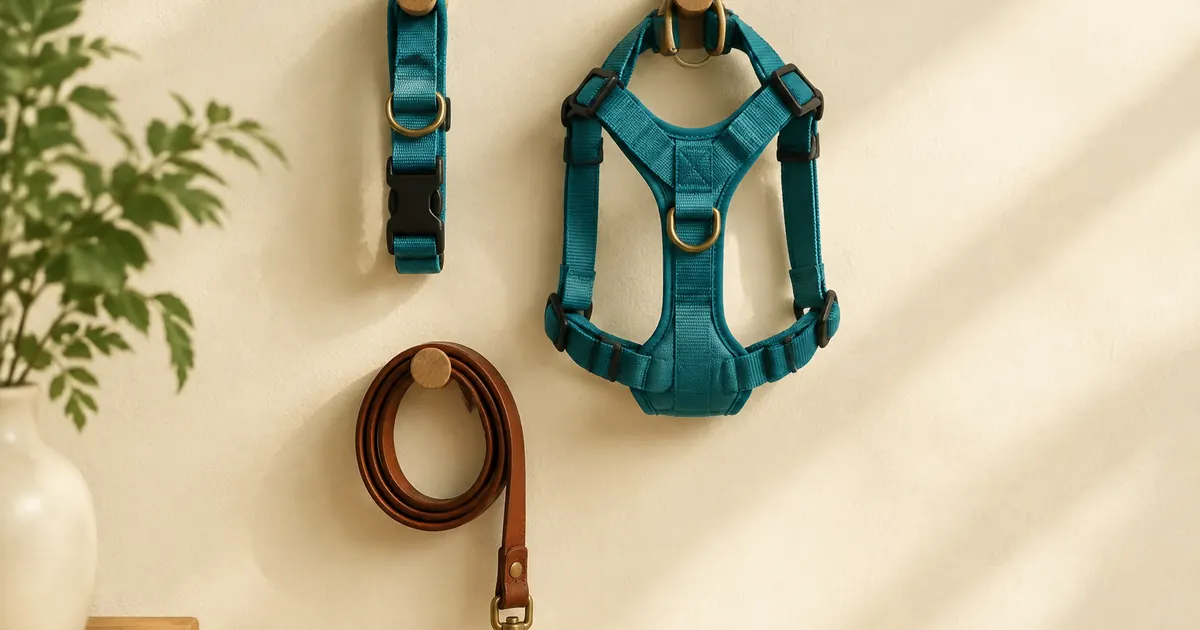
Walk into any dog park and you will see the whole spectrum: flat collars, padded harnesses, LED collars blinking at dusk. The gear debate gets surprisingly heated, but the answer is not ideological — it is anatomical. Collars and harnesses do different jobs, and most dogs end up needing both.
What a Collar Is Actually For
A collar is an ID device that happens to accept a leash. Tags, licenses, and your phone number live there, which is why even harness-only dogs should wear a collar — if a gate opens or a leash slips, the collar is what gets them home. A well-fitted collar sits snugly with room for two fingers, and the Glorytails reflective nylon collar adds a reflective weave for evening walks plus an adjustable range (11–16 inches) that covers most small and medium dogs through their growth phases.
When a collar-only setup is fine
Calm leash walkers with sturdy necks — many adult labs, retrievers, and mixed breeds — can be walked on a flat collar without issue. The key phrase is calm leash walkers. If your dog surges toward squirrels, the physics change.
When a Harness Wins
Pressure on a collar concentrates on the throat — exactly where the thyroid and a delicate windpipe live. A harness redistributes that force across the chest and shoulders. Choose one when:
- Your dog pulls. A front-clip harness like the Glorytails no-pull harness redirects pulling energy sideways instead of rewarding it with forward motion. It is training support, not a muzzle — pair it with rewarding loose-leash moments.
- Short-nosed or throat-sensitive breeds. Pugs, bulldogs, beagles, and any chronic honker (harnesses reduce the gagging reflex).
- Toy breeds. A chihuahua's trachea is not rated for leash pressure. Ever.
- Puppies. Leash manners are not installed yet; protect the throat while they learn.
Fitting: Where Most Gear Fails
A bad fit makes good gear useless. For harnesses, you want two fingers of room under every strap, the front clip sitting on the breastbone (not the throat), and no rubbing at the armpits after a ten-minute walk. The Glorytails harness adjusts at four points, which matters because dogs rarely match a size chart perfectly. For collars, check fit after grooming — a fresh haircut can loosen a collar by a full size.
The Night-Walking Upgrade Nobody Regrets
If you walk before sunrise or after dinner, visibility is a safety issue. The rechargeable LED collar makes a dog visible to drivers at surprising distances, is waterproof for rainy walks, and charges over USB — no button-cell batteries dying mid-walk. It pairs well with a reflective harness for a two-layer visibility setup.
The Hands-Free Middle Ground
Joggers and market-goers should look at the hands-free waist leash. It turns a calm walker into a genuine running partner, but earn it first: it amplifies pulling the same way a long leash does. It is a graduation reward, not a starting point.
Breaking In New Gear
Whatever you buy, let your dog wear it around the house first — ten minutes with dinner as the reward, then a short walk. Harnesses especially need a few positive exposures before they predict a walk; otherwise the sight of the harness starts the hiding game. Check rub points after the first three walks: redness at the armpits means an adjustment or a size change, not something to push through.
Don't Skip the ID Tag
Gear fails; tags don't. A collar buckle can pop and a harness strap can slip, but an engraved tag stays on the collar through everything. The stainless steel ID tag survives years of clinking against bowls and tags with deep engraving that stays readable — which is the entire point. Phone number on one side, address or "microchipped" on the other. It is the five-dollar insurance policy on every other purchase in this guide.
Our Recommendation
Collar with ID always on. Harness for the actual walk if your dog pulls, is small, or has a short nose. Leather or padded leash from the walk collection to complete the setup. That combination covers identification, joint protection, and training support in one purchase — and with free shipping and no sales tax, there is no reason to make do with gear that fights your dog's anatomy.