Overgrown nails change how a pet walks. Long nails force toes to twist outward, put pressure on wrist and ankle joints, and in cats contribute to snags, ingrown claws, and shredded furniture. Yet most nail trims end in wrestling matches because the process was rushed from day one. Done calmly, a trim takes ninety seconds. Here is how to get there.
Get the Right Clippers First
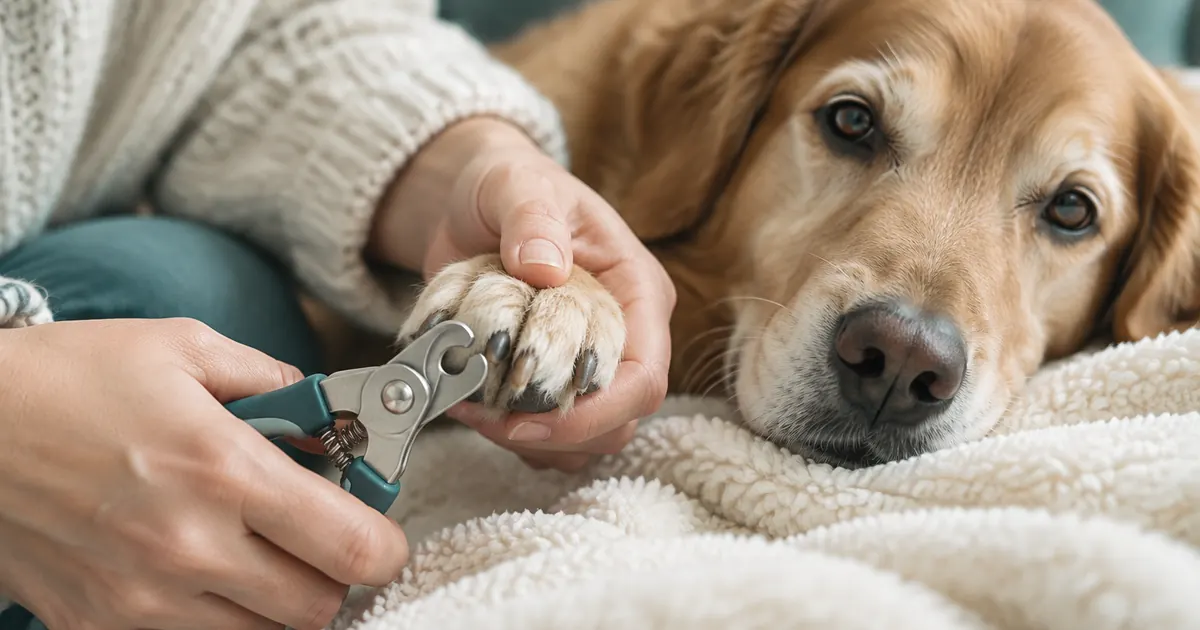
The biggest hardware-store mistake is using human nail clippers, which crush a pet's nail sideways instead of slicing it. You want guillotine-style clippers sized to your pet, with a safety guard that stops you from taking too much. The Glorytails stainless steel clippers with safety guard come in three sizes and two colors, and the guard is the feature that saves first-timers from their own nerves. Sharp stainless blades matter too: a dull blade squeezes the nail, and that squeezing is what pets feel and remember.
Know Where the Quick Is
Inside every nail is the quick — a blood vessel and nerve that bleeds and hurts if cut. On light nails it shows as a pink triangle; on dark nails you cannot see it, so you trim thin slivers and stop when the cut surface shows a small dark dot in the center. That dot is your warning light: it means you are close.
- Light nails: Trim to 2–3 mm before the pink triangle.
- Dark nails: Trim tiny slivers, checking the cut face after each.
- Cats: Gently press the toe pad to extend the claw; only the clear curved tip gets trimmed.
Keep styptic powder (or cornstarch in a pinch) nearby. If you nick the quick, it stings but is not dangerous — press the powder in for ten seconds and the bleeding stops.
The Calm Trim, Step by Step
- Set the scene. A non-slip surface, good light, and your pet already relaxed — after dinner, not after a rowdy play session.
- Handle the paws first. For three days before your first trim, simply hold each paw for five seconds and give a treat. This step is not optional for nervous pets; it is the whole foundation.
- Trim one nail. Just one, then treat and stop. Day one might be one nail total. That is a win.
- Build up. Add a nail per session. Most pets accept a full trim within a week of this pacing.
- Angle the cut. Slice from the underside at roughly 45 degrees, following the nail's natural curve rather than cutting straight across.
If Your Pet Panics
Do not hold a struggling pet down to finish — that memory outlasts any trim. Instead, end the session, and resume later or the next day at the last successful point. For extreme cases, ask your vet about a calming aid before the session, and consider having a second person feed treats while you work. Speed comes from trust, and trust comes from sessions that always end well.
Puppies, Kittens, and First Trims
Start handling paws during the first week you bring a pet home — eight-week-old puppies and kittens are at the ideal age to learn that paw touching is harmless. Their first trims should be a ritual, not a goal: snip the tiniest tip off two nails, reward generously, and stop. Young pets learn the pattern in a handful of sessions, and you are buying yourself a decade of easy trims later. For adult rescues with no trim history, the same rule applies with more patience — assume every session is a first impression.
Tools That Make Trims Easier
Beyond clippers, three cheap additions make the process smoother. A non-slip mat gives nervous pets footing and confidence. A lick mat smeared with peanut butter (xylitol-free!) stuck to the wall occupies a dog for the entire trim. And a headlamp or a phone flashlight helps you spot the quick on dark nails — seeing clearly is half the battle. None of this replaces the fundamentals: sharp stainless clippers with a safety guard, good light, and a pet who trusts the routine.
How Often Should You Trim?
Listen for clicking on hard floors — that is the universal signal. For most dogs, every three to four weeks keeps the quick receded short. Indoor cats need their claws checked every two to three weeks since they lack the wear outdoor surfaces provide. Frequent small trims are better than infrequent big ones: regular trimming actually makes the quick recede, so the nails get progressively shorter and safer over months.
Make It a Ritual, Not a Battle
Same time, same spot, same treat. Pets are pattern learners, and a predictable routine removes most of the anxiety on both sides of the clippers. Our grooming collection includes the safety-guard clippers in three sizes, and everything ships free — so the only thing standing between you and click-free floors is a week of one-nail sessions. Your pet's joints will thank you within the month.