If you have ever bought a grooming brush that your pet tolerated for exactly eleven seconds before walking away, you already know the problem: most brushing advice treats all coats as the same. They are not. A husky's double coat, a short-haired beagle's sleek topcoat, and a Persian's flowing undercoat need three completely different tools. Pick correctly and brushing becomes a five-minute ritual your pet actually enjoys. Pick wrong and you get pulled fur, skipped sessions, and a house that looks like it snowed.
Start With the Coat, Not the Brush
Run your hand against the grain of your pet's fur. What you feel determines everything:
- Short, smooth coats (beagles, boxers, most domestic shorthair cats) shed constantly but rarely mat. You need a tool that captures loose undercoat without scratching skin.
- Double coats (retrievers, huskies, corgis, maine coons) blow out seasonally. The undercoat dies and traps against the topcoat until mechanically removed.
- Long or silky coats (shih tzus, yorkies, persians) mat behind the ears, in the armpits, and along the harness line. You need something that splits mats without a blade.
Why Deshedding Brushes Earn Their Hype
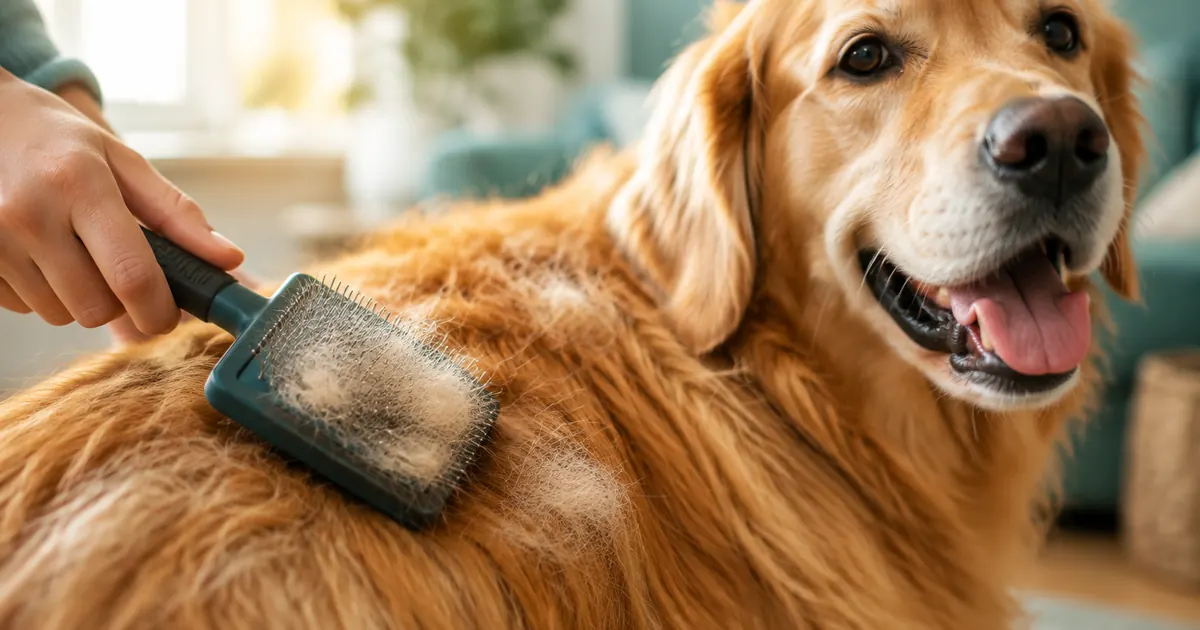
A quality stainless steel deshedding brush removes the dead undercoat before it lands on your furniture. The fine-toothed edge reaches through the topcoat and pulls loose undercoat out in satisfying clumps. For double-coated breeds during spring and fall blowouts, this is the single highest-impact tool you can own.
Size matters more than most listings admit. A 7.5-inch brush like the Glorytails deshedding tool covers mid-sized dogs in a few passes; the same tool works beautifully on cats because the tooth row matches a cat's flank. For giant breeds you will simply make more passes — the technique stays identical.
How to use one without irritating skin
Use light, long strokes in the direction of hair growth. The tool does the work; pressure does not. Two or three passes per section is plenty. Going over the same spot a dozen times, pressing hard, is the most common cause of brush burn we hear about. Stop when the clumps stop coming.
When You Need a Dematting Comb Instead
Mats are compacted tangles that a brush glides over and a deshedding tool can jam against. If you can gently separate a tangle with your fingers but it will not brush out, it is a mat. A double-sided dematting comb is the right tool: the coarser side breaks mats into sections, the finer side finishes the coat smooth.
Work from the outer edge of the mat inward, holding the fur at the base so you never pull the skin. Behind ears, under collars, and along the groin are the usual crime scenes. If a mat sits tight against skin, do not cut it out with scissors — that is how pets get injured. Comb it out over several short sessions or let a groomer handle it.
Grooming Gloves: The Trust Builder
Some pets — rescues, seniors, cats with opinions — will not sit still for tools. A pair of silicone grooming gloves turns brushing into petting. The soft silicone tips lift loose hair while your hand delivers the contact your pet already trusts. They are also the best tool for bath day: work shampoo through the coat with the gloves on and you deshed while you wash.
Gloves remove less undercoat than a dedicated deshedding brush, so think of them as the daily maintenance layer, with the brush as the weekly deep clean.
A Simple Weekly Routine That Actually Works
- Monday: Two minutes with grooming gloves while your pet relaxes — keeps the habit positive.
- Wednesday: Full deshedding session, one body section at a time, treating after each.
- Friday: Dematting comb check behind ears, armpits, and collar line.
- Any day: After every session, a treat and end while it is still fun. Never end on a struggle.
The Mistakes That Ruin Grooming for Pets
Three come up again and again. First, brushing a dry, dirty coat — debris causes friction and pulls; brush after a walk when the coat is settled, or right after a bath. Second, using human brushes: the pin lengths and spacing are wrong for pet coats and can scratch skin. Third, expecting one session to undo months of shedding. Deshedding works cumulatively — three short sessions beat one marathon every time.
The Bottom Line
Match the tool to the coat: deshedding brush for undercoat, dematting comb for tangles, gloves for trust and bath day. Our complete grooming collection covers all three, and every tool ships free with no sales tax. Start with the deshedding brush if you are unsure — it is the tool groomers reach for first, and the one your vacuum will thank you for.